Tension-annealed nanocrystalline ribbon held to a controlled permeability of 200–600 μi for DC-biased inductors. It is not a substitute for high-permeability 1K107 or for 1K101 amorphous transformer ribbon.
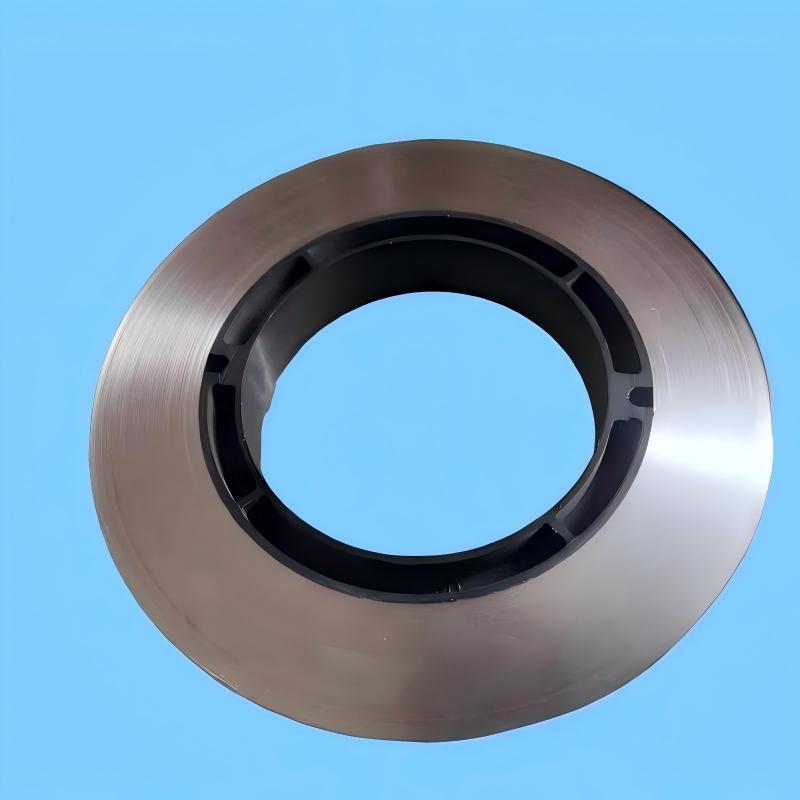
This MagComponent ribbon is tension annealed so initial permeability stays inside 200–600 μi. That band is the point of the product: an inductor can be designed for a known inductance and still carry DC. Saturation flux density on this page is 1.2 T. Inductance is described as stable from 1 kHz to 1 MHz, with a resonance zone called out at 10–20 MHz as the upper boundary for the linear region. Operating temperature is −40°C to +150°C.
MagComponent publishes three ribbons that are easy to confuse because two of them are nanocrystalline. The controlled 200–600 μi band is what separates this page from both siblings. Use 1K107 nanocrystalline ribbon when the design needs the permeability published on that page, above 80,000, for common-mode chokes and current transformers. Use 1K101 amorphous ribbon when the job is a line-frequency distribution transformer: that page publishes 1.56 T saturation and core loss of 0.1–0.14 W/kg at 1.35 T / 50 Hz, not a DC-bias inductor grade.
| Published point | Low permeability nanocrystalline ribbon | 1K107 ribbon | 1K101 amorphous ribbon |
|---|---|---|---|
| Initial permeability | 200–600 μi, with named grades 200, 300, 400, 500, and 600 | > 80,000 on the 1K107 page | 10,000 on the products catalog card for 1K101 |
| Saturation flux density | 1.2 T on this page | ≈ 1.25 T on the 1K107 page | 1.56 T on the 1K101 page |
| Frequency statement | Inductance stability from 1 kHz to 1 MHz; resonance zone noted at 10–20 MHz | High-permeability ribbon for high-frequency magnetics, not a 200–600 grade | Core loss published at 50 Hz (0.1–0.14 W/kg at 1.35 T) |
| DC bias | 22-turn sample: about 10 A / 60 Oe at 200 μi, about 5 A / 30 Oe at 400 μi, about 3.5 A / 20 Oe at 600 μi | Not published as a low-permeability, DC-bias inductor grade | Not published as a controlled-permeability inductor ribbon |
| Temperature published for that product | −40°C to +150°C | μ variation typically < ±10% from −40°C to 140°C; Curie temperature ~570°C | Distribution-transformer ribbon; no 200–600 μi temperature grade on that page |
Sibling columns repeat figures already published on the 1K107 page, the 1K101 page, and the products catalog. They are not new test results for this ribbon.
The winding stores energy or carries DC, and permeability has to stay inside a known 200–600 window so inductance does not start at the >80,000 level of 1K107 and then collapse. Typical circuits already listed on this page are EV onboard-charger inductors, DC-DC inductors, photovoltaic filter and DC-link inductors, and industrial power-supply magnetics in the 1 kHz to 1 MHz band.
Choose 1K107 for a common-mode choke or current transformer that needs the high permeability and the high-frequency performance published there. Choose 1K101 when the specification is no-load loss of a 50 Hz transformer, including the amorphous planar core and the amorphous E-core built from that alloy. Neither sibling is tension-annealed to the 200, 400, or 600 grades in the table below.
Leveraging tension annealing technology, our ribbon maintains exceptional inductance stability under substantial current stress.
Demonstrates exceptional inductance consistency across a broad frequency spectrum.
Comprehensive selection to balance inductance requirements with saturation current needs.
Tension annealing is used to hold the permeability grades below.
| Initial Permeability (μi) | Inductance Stability (to 1MHz) | Saturation Field Strength (H) | DC-Bias Capability (22Ts) |
|---|---|---|---|
| 200 | Excellent | ~60 Oe | ~10.0 A |
| 400 | Excellent | ~30 Oe | ~5.0 A |
| 600 | Good | ~20 Oe | ~3.5 A |
* Data based on 22-turn test sample measurements
Low permeability grades (200 μi) demonstrate the widest linear range, maintaining stability up to 10A
Perfect linear performance below 1MHz, with resonance zone at 10MHz-20MHz
Non-linear impedance increase with frequency, effective for high-frequency noise suppression
Only three grades have bias numbers on this page, all taken on a 22-turn sample. The 200 μi grade is the one published with the widest bias window, about 10 A or 60 Oe, and with excellent inductance stability out to 1 MHz. The 400 μi grade is published at about 5 A or 30 Oe, still with excellent stability to 1 MHz. The 600 μi grade is published at about 3.5 A or 20 Oe, with good rather than excellent stability to 1 MHz, and it is the grade to consider when the design needs more inductance per turn and the DC current is lower.
Grades 300 and 500 are offered on this page as steps between those points: 200 and 300 are described as the maximum DC-bias pair, and 400, 500, and 600 as the higher-inductance pair. Field strength and bias current are not published for 300 or 500, so a quote should name the grade and ask for the sample condition rather than interpolating the 22-turn table.
Keep the switching frequency inside the 1 kHz to 1 MHz interval where inductance is described as flat. The page marks 10–20 MHz as a resonance zone, which is guidance for where not to operate, not a second guaranteed band. For the inductor current waveform itself, see the buck converter magnetic design note and the PFC inductor saturation case study.
These are inductor duties with DC in the winding. Onboard chargers and vehicle DC-DC stages are covered under EV and electric vehicles. Photovoltaic filter and DC-link inductors sit with renewable energy and smart grid. A high-permeability common-mode choke is a different material choice; permeability and EMI behavior of that class are discussed in nanocrystalline versus ferrite for EMI suppression.
High-frequency inductors for OBC (On-Board Chargers), DC-DC converters
High-power filter inductors, DC-link inductors for photovoltaic systems
Magnetic components requiring high power density and thermal stability
Impedance that rises with frequency, including differential-mode filtering. A common-mode choke that needs the permeability above 80,000 published for 1K107 should use that ribbon instead of this 200–600 grade.
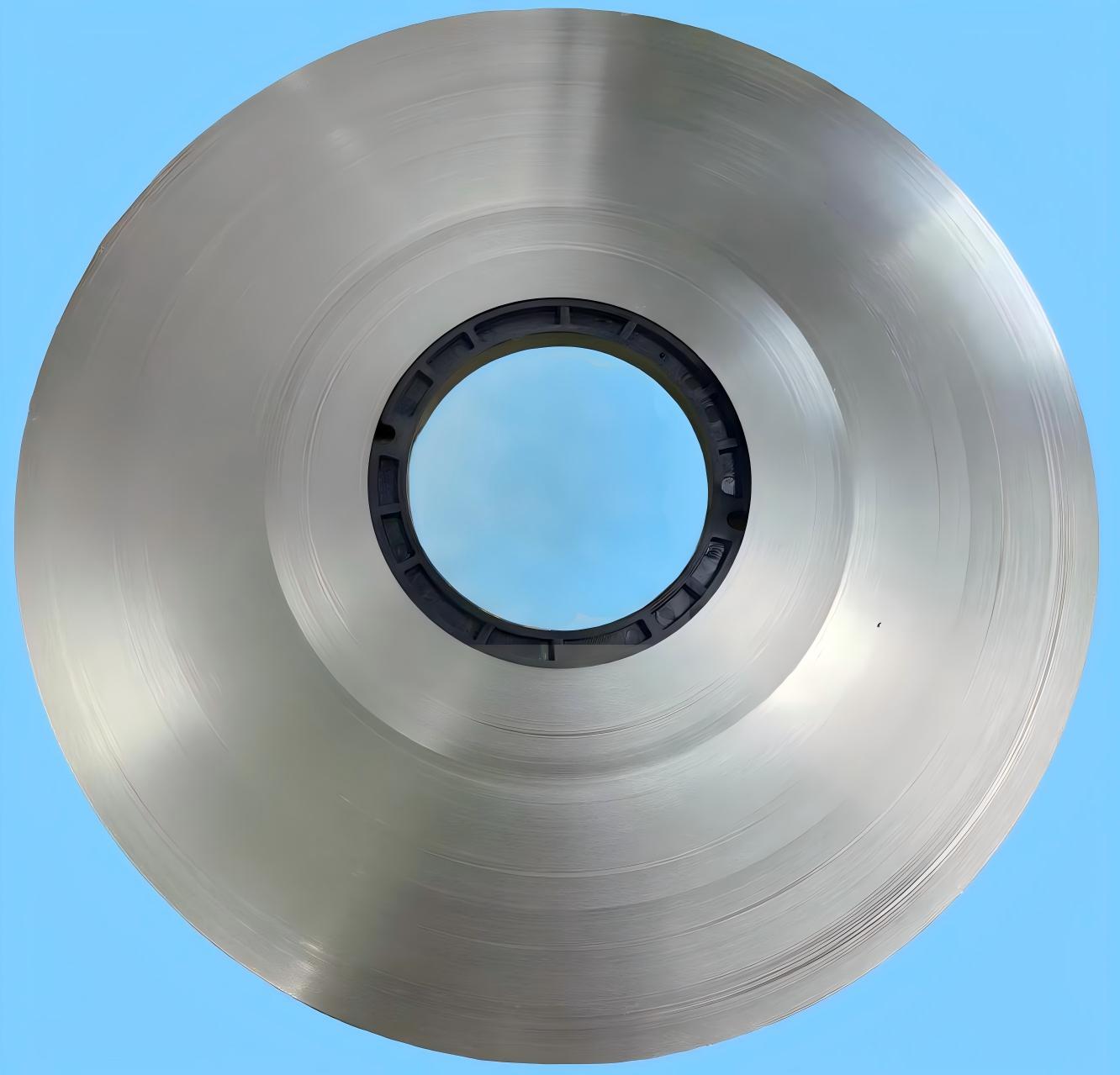
High-permeability sibling, published above 80,000 μi and Bs ≈ 1.25 T, for common-mode and current-transformer cores rather than DC-biased inductors.
View Details →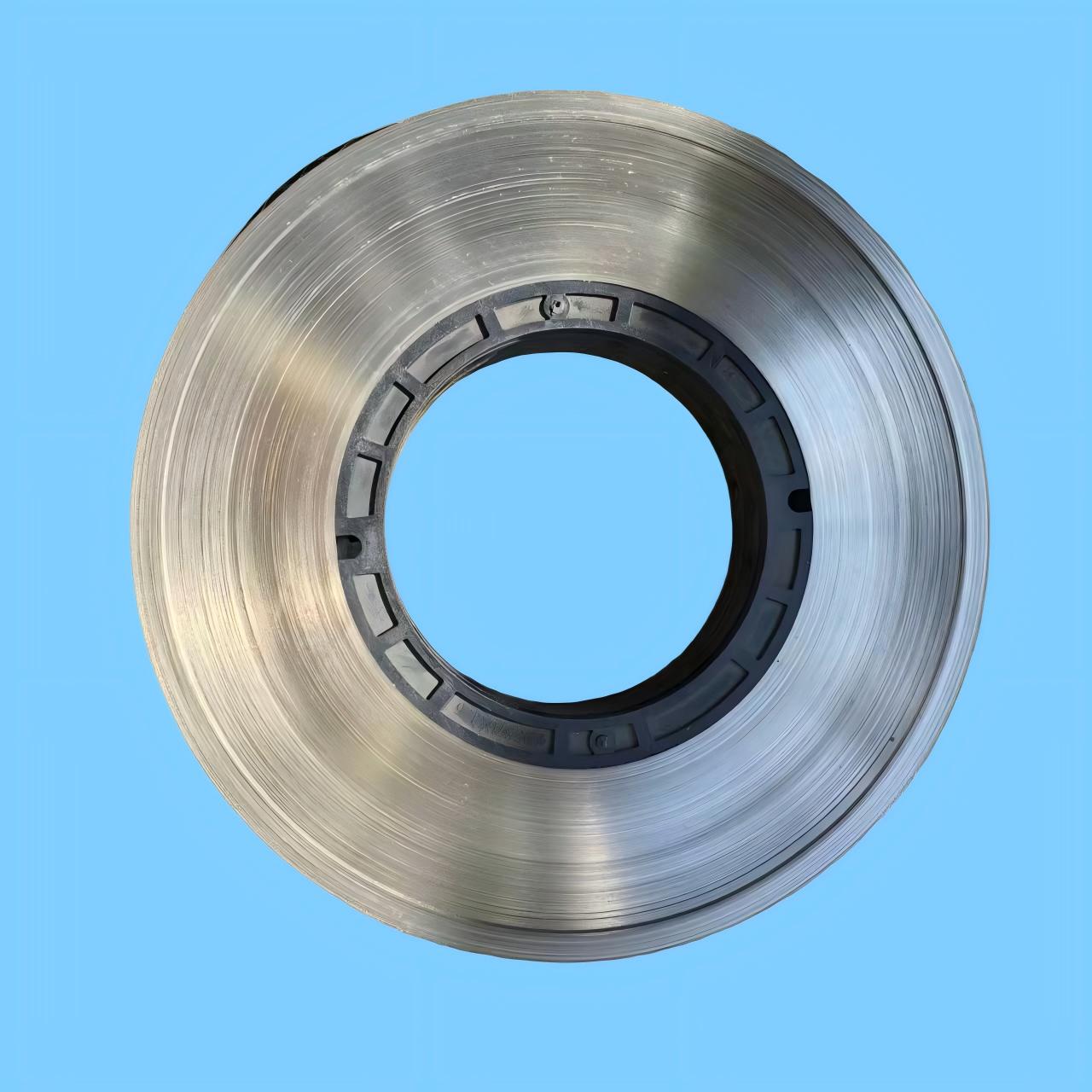
Iron-based amorphous ribbon at 1.56 T for 50 Hz distribution transformers, not a 200–600 μi inductor grade.
View Details →Our low permeability nanocrystalline ribbon typically ranges from 200-600 μi, with controlled permeability achieved through specialized tension annealing processes.
This material is ideal for EV OBC systems, solar inverters, high-frequency inductors, and applications requiring excellent DC-bias performance and frequency stability.
Our nanocrystalline ribbon operates reliably from -40°C to +150°C, making it suitable for demanding industrial and automotive applications.
Yes, we offer custom permeability tuning within the 200-600 μi range to meet specific application requirements and design parameters.
Contact our technical experts to discuss your specific requirements and get customized solutions for your applications.