
BYD's flash charging technology is spreading across China: 20,000 charging stations, 1500kW single-gun power, 5-minute full charge—these numbers are impressive enough to make the industry reconsider one question:
When charging speed is no longer the bottleneck, what is the real bottleneck?
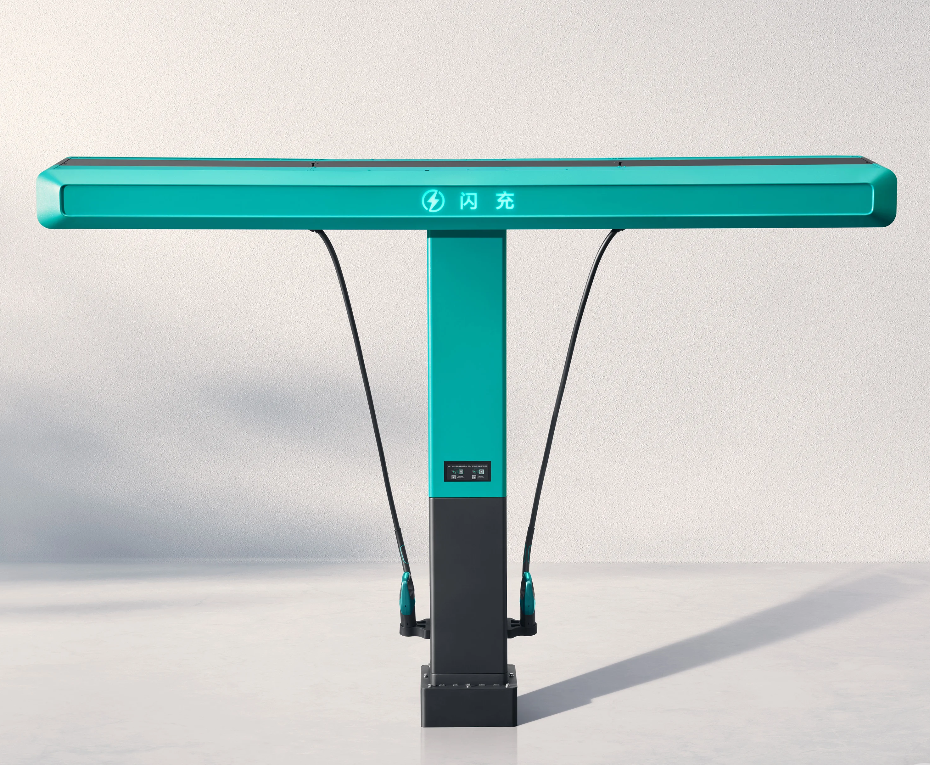
Figure 1: BYD's flash charging technology is revolutionizing EV charging with 1500kW power
1. Flash Charging Technology Solves Vehicle Challenges
BYD's second-generation Blade Battery with 10C charging rate represents a victory of materials and structure. Optimized ion channels and breakthroughs in cell thermal management allow electricity to flow into the battery like water. This is the result of ten years of battery technology accumulation and a key step toward the ultimate charging experience for electric vehicles.
But there's an often overlooked detail: BYD equips each flash charging station with an energy storage system. The official explanation is "to avoid causing massive impact on the power grid."
This statement is worth careful consideration.
2. When 1500kW Loads Hit, the Grid Becomes the Real Battlefield
A flash charging station at full load is equivalent to hundreds of air conditioners running simultaneously. If thousands of flash charging stations operate at the same time, the impact on local power grids would be catastrophic.
This is a physical law that cannot be circumvented by technology.
Currently, attitudes toward new charging technologies vary across regions. Some are actively piloting, some are cautiously observing, and others are directly stuck on unclear standards. This is not the dilemma of a single company but a common issue facing the entire industry—the evolution of grid infrastructure cannot keep pace with the leap in charging speed.
In this context, the role of Solid State Transformers (SST) becomes particularly important.
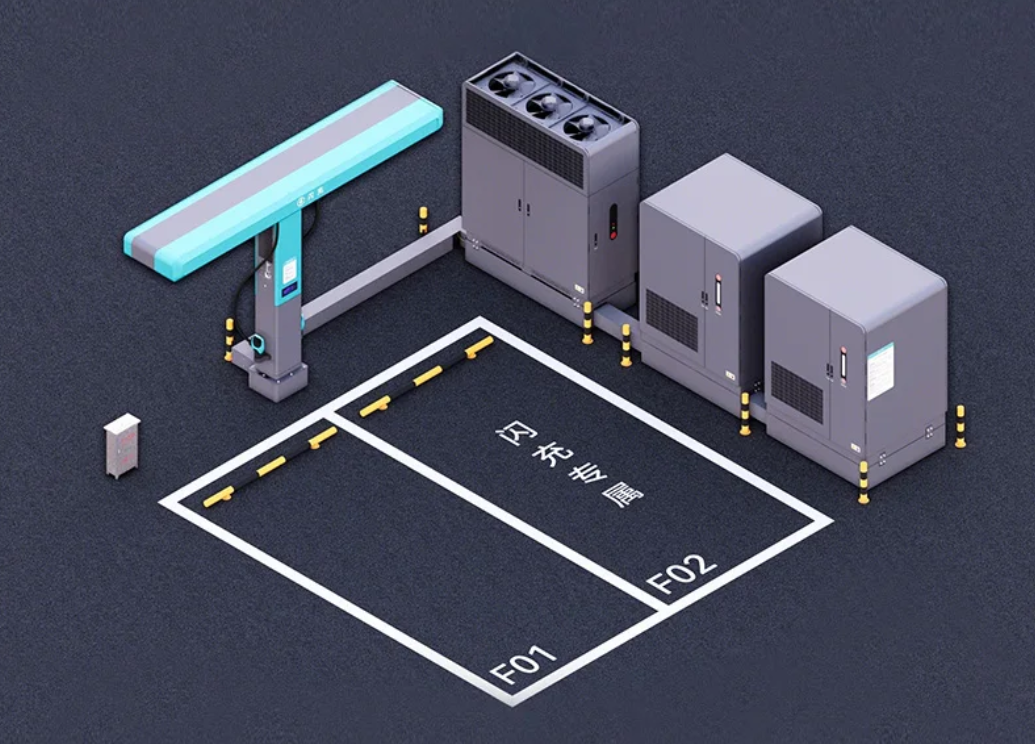
Figure 2: Solid State Transformers enable direct medium-voltage grid connection for flash charging stations
The core logic of SST is simple: replace traditional power frequency transformers with power electronics technology, allowing charging stations to directly connect to medium-voltage grids, eliminating the multi-stage process of "step-down transformer + AC/DC conversion." Current converts directly from 10kV to 750V DC, passing through only one conversion stage.
This means three things:
Currently, implementation cases of this technical approach can be seen at gas stations, power supply offices, and highway service areas in Jiangsu, Guangdong, and other regions.
3. The Economic Reality of Flash Charging Stations
The faster the charging speed, the higher the grid capacity requirements. Transformer expansion, approval cycles, and power capacity increase costs—these hidden costs will eventually land on operators' ledgers.
There's a voice in the industry: when users get used to 5-minute full charges, competition among operators will shift from "charging speed" to "charging cost." The profit margin per kWh is the core indicator that determines whether a station can make money.
This is no longer just about equipment; it's about system efficiency.
SST's Value Proposition
SST's value unfolds precisely on this dimension. It doesn't make vehicles charge faster, but it makes each kWh of electricity travel from grid to wheel with less loss, lower cost, and easier implementation.
4. Emerging Industry Consensus
In Huawei's recently released ten trends for charging networks, "DC storage and charging" and "park microgrid" are listed as important directions. DC storage and charging can quickly retrofit or build new ultra-fast charging stations with small utility power, which is a viable path to solve grid connection challenges.
The essence of "DCization" is to connect photovoltaics, energy storage, and charging to the same DC bus, reducing losses from AC/DC conversions. To achieve this, the core equipment is the "energy router" that can efficiently connect AC grids and DC buses—which is exactly the Solid State Transformer.
Some pioneers are already exploring this architecture: 10kV direct SST systems, combined with photovoltaics and energy storage, forming fully DC-coupled integrated solar-storage-charging stations. Solar-generated electricity goes directly into storage and directly charges vehicles, bypassing the AC side entirely. In technical terms, this is called "full DC coupling"; in operators' terms, it's called "no wasted kWh."
5. Three Key Changes in the Charging Industry Over the Next Three Years
Change 1: From "Speed Competition" to "System Competition"
As charging speeds converge, the focus of competition will shift to overall solutions—who's stations are easier to implement, who has higher efficiency, and who makes operators more profitable. This is an upgrade from "single-point technology" to "system capability."
Change 2: From "Vehicle-Grid Separation" to "Vehicle-Grid Integration"
Flash charging stations equipped with energy storage are essentially implementing "grid-friendly fast charging." The grid side is also exploring smarter connection methods, and devices like SST are becoming key nodes connecting the two. Over the next three years, automakers will need to understand grids, and power equipment manufacturers will need to understand vehicles. The boundaries will become increasingly blurred.
Change 3: From "Standard Lag" to "Standard Acceleration"
The construction pressure of 20,000 flash charging stations will force grid connection standards to accelerate. Those who can contribute practical experience to standard formulation will gain an advantage in the next round of competition. Successful SST connection cases are already emerging in some regions, and these practices are becoming important references for standard formulation.
6. Final Thoughts
Flash charging technology is making electric vehicles truly achieve "seamless energy replenishment." This is a tremendous industry advancement. But technological progress never happens in isolation—faster front wheels need more stable rear wheels for support.
The real battlefield of the flash charging era is not in the vehicle, but on the road between the vehicle and the grid.
This road requires smarter design, more efficient architecture, and people who understand systems.
Solid State Transformers (SST) are becoming an increasingly important role on this road—they don't participate in the speed race, but they make the speed race possible.
Ready to Implement SST for Your Charging Infrastructure?
MagComponent offers high-performance nanocrystalline cores and components specifically designed for SST applications. Our engineering team can help optimize your transformer design for maximum efficiency and reliability.
Contact Our SST ExpertsRelated Articles
Solid State Transformer: The Core Heart of Green Energy
Comprehensive comparison of SST vs. traditional transformers for renewable energy integration and grid modernization.
Read More →24MW Solid State Transformer Design
Deep dive into ISOP and DAB topology, SiC MOSFETs, and nanocrystalline high-frequency transformers for 20kV to 0.8kV conversion.
Read More →Current Transformer Future Trends
Digital CTs, optical transformers, and high-frequency current sensing for the next generation of power systems.
Read More →Nanocrystalline Ribbon Flatness
Why ribbon flatness is non-negotiable for high-frequency magnetic components and how it affects core performance.
Read More →