
In the precision-driven world of magnetic component manufacturing, what you can't see often matters most. A roll of nanocrystalline ribbon might look like a sleek, metallic masterpiece to the untrained eye, but for the engineering team at DG Focus Technology (MagComponent), a single "wave" or surface irregularity is a red flag that demands immediate action.
Quality in power electronics doesn't begin on the assembly line; it begins at the atomic level of the raw materials we source. When we encounter a batch of nanocrystalline ribbon with uneven surface tension or "wavy edges," we aren't just looking at an aesthetic flaw—we are looking at a performance compromise that could jeopardize an entire high-frequency project.
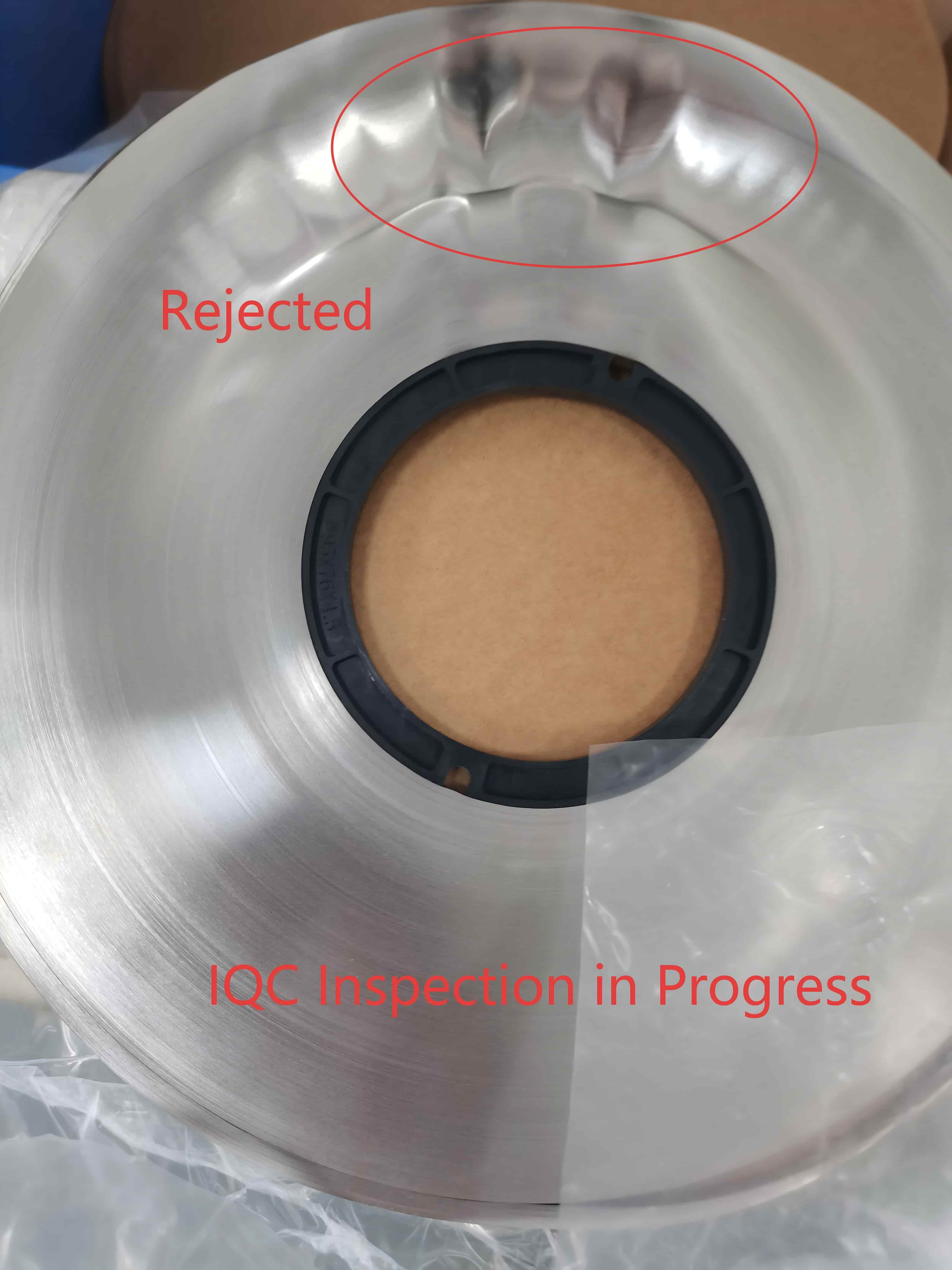
High-precision surface analysis of nanocrystalline ribbon showing the importance of flatness for magnetic performance.
The Physics of Flatness: Why Microns Matter
Nanocrystalline alloys are the backbone of modern high-power density inductors and transformers. Typically measuring between 18 and 25 micrometers—thinner than a human hair—these ribbons are remarkably sensitive to physical stress. Surface uniformity is not a luxury; it is a technical requirement for three critical reasons:
1. Optimizing the Stacking Factor
To achieve maximum magnetic efficiency in a compact footprint, ribbon layers must be wound as tightly as possible. Any "waviness" creates microscopic air gaps between layers. This reduces the stacking factor, leading to unpredictable eddy current losses and thermal spikes that can shorten the lifespan of a component.
2. Eliminating the "Acoustic Hum"
In applications like EV charging or medical imaging, silence is a performance metric. Uneven layers within a core can lead to magnetostriction-induced vibrations. By rejecting ribbons with surface deviations, we prevent the dreaded "transformer hum" before the core is even wound.
3. Preserving Magnetic Permeability
Nanocrystalline materials are stress-sensitive. Mechanical tension caused by winding an uneven ribbon directly degrades magnetic permeability. This results in inconsistent EMI filtering and lower overall efficiency in power conversion.
The DG Focus Standard: An Uncompromising IQC Process
At MagComponent, our Incoming Quality Control (IQC) is designed to be the ultimate filter. We utilize high-precision metrology and surface profilometers to audit every batch of ribbon. If a material exceeds our rigorous flatness tolerance (often within ±2μm), it is immediately flagged and rejected.
This level of scrutiny might seem obsessive, but it is the only way to ensure the reliability of the components that power renewable energy grids and electric vehicle drivetrains. By maintaining a strict feedback loop with our material suppliers, we ensure that only "Grade A" nanocrystalline ribbons enter our cleanrooms. This proactive rejection of sub-par materials is what allows us to deliver inductors that run cooler, quieter, and longer than standard market alternatives.
Quality Insight
The difference between a component that merely "works" and one that "excels" lies in the details that most manufacturers overlook. While others might attempt to compensate for poor material flatness by adjusting winding tension, we believe in solving the problem at the source.
Engineering Reliability from the Core Up
Selecting the right magnetic component starts with selecting a partner who understands the material science behind the product. If your current prototypes are struggling with thermal management or acoustic noise, the root cause may be hidden within the layers of the core material itself.
Our engineering team is ready to help you optimize your next design with materials that meet the "Focus Standard." Whether you are developing the next generation of SiC/GaN inverters or high-speed rail power systems, we invite you to explore how our commitment to raw material integrity can elevate your project's performance.
Discover our range of high-precision magnetic solutions at www.magcomponent.com or reach out to our technical team to discuss your specific material requirements.
Ready to Elevate Your Magnetic Design?
Partner with MagComponent for materials that meet the highest standards of flatness and performance.
Contact Our Technical Team