
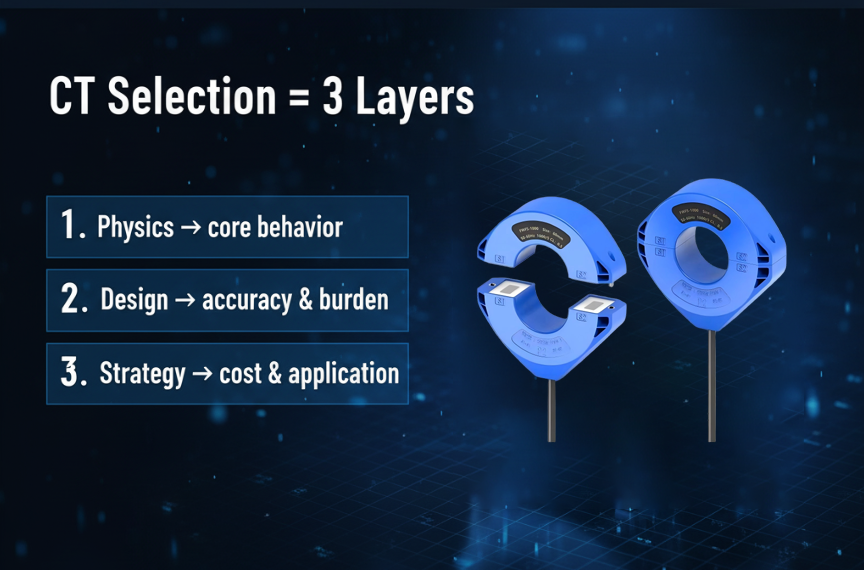
The global current transformer market is experiencing significant changes in trade dynamics and competitive landscape.
In the global marketplace, standards and certifications serve not only as quality benchmarks but also as regulatory barriers that distinguish reputable suppliers. The market clearly divides between the IEC and IEEE/ANSI standards ecosystems. For magnetic component manufacturers aiming to expand internationally, understanding these standards and associated trade considerations is essential.
International Standards & Trade Barriers
IEC 61869: The "Universal Law" of Global Power Systems
The IEC 61869 series standards—particularly IEC 61869-2 for current transformers—dominate markets in Europe, China, Southeast Asia, the Middle East, and Africa. These standards define strict classification requirements for insulation levels, such as 0.72/3kV and 12/28/75kV. For manufacturers exporting to these regions, obtaining type test reports from respected laboratories like KEMA or CESI is essential for accessing high-value utility projects.
IEEE C57.13: Special Guidelines for the North American Market
The US and Canadian markets rely heavily on the IEEE C57.13 standard. In terms of accuracy classification, it uses designations like Class 0.3 and 0.6, with nuanced differences from IEC standards regarding Transformation Correction Factor (TCF) requirements.
UL 2808: Mandatory Standard for North American Energy Monitoring
In the sub-metering and energy management sector, UL 2808 certification has become a mandatory requirement for North American customers. Many manufacturers previously used UL 61010 certification, but this standard no longer applies to field-installed split-core current transformers.
Trade Risk Alert
Products lacking UL 2808 certification may face removal or power connection refusal during local electrical inspections (AHJ). The standard mandates higher plastic flame retardant levels (UL 94V-0) and more rigorous wire mechanical pull tests.
Green Barriers: RoHS, REACH & Environmental Directives
The EU's RoHS (Restriction of Hazardous Substances) and REACH (Registration, Evaluation, Authorization and Restriction of Chemicals) directives present significant compliance challenges for international trade. Transformer components—including insulation enameling, potting resins, and contact alloys—must demonstrate compliance with restrictions on lead, cadmium, hexavalent chromium, and other substances. Additionally, upcoming revisions to the EU Eco-Design Directive will introduce requirements for transformer carbon footprints and material recovery rates across their lifecycle.
Competitive Landscape & Market Leadership
The global current transformer market is undergoing a structural shift—moving from traditional European and American dominance toward a more diversified landscape with emerging market players gaining prominence.
| Brand/Manufacturer | Estimated Market Share (2024) | Core Competitive Advantage | Key Export/Coverage Areas |
|---|---|---|---|
| Siemens | 16.5% | Digital integration, UHV technology, global brand premium | Global (Europe and America dominant) |
| ABB | ~12% | TXpert™ digital monitoring, advanced core technology | Global (high-end power projects) |
| Schneider Electric | ~8% | Building/commercial power distribution, EcoStruxure software ecosystem | Europe, North America |
| TBEA | ~6% | UHV transformer expertise, domestic grid backbone | China, Southeast Asia, Africa |
| JSHP | ~4% | Large oil-immersed transformers, special transformer exports | Global (industrial markets) |
Chinese Strength: From "Manufacturing Center" to "Standard Output"
Chinese manufacturers have formed a complete closed loop from raw materials (such as nanocrystalline ribbon) to finished product manufacturing in the current transformer field, especially with the most active industrial clusters in Yueqing, Zhejiang, Jiangsu, and Guangdong.
Small and medium-sized professional OEM manufacturers, such as Yaohua Dechang and Dixsen, meet the global long-tail market demand through extreme delivery speed and flexible customization. This diverse competitive landscape is reshaping the global current transformer industry.
Strategic Insights for Market Entry
For magnetic component manufacturers looking to expand globally, understanding the nuanced trade barriers and market dynamics is crucial. The key to success lies in:
- Standard Compliance: Obtaining the necessary certifications for target markets (IEC, IEEE, UL)
- Material Innovation: Leveraging advanced materials like nanocrystalline to improve performance and reduce costs
- Regional Adaptation: Customizing products to meet specific regional requirements and preferences
- Digital Integration: Embracing smart grid technologies and digital monitoring capabilities
- Sustainability: Adhering to environmental regulations and developing eco-friendly solutions
By focusing on these strategic areas, manufacturers can navigate the complex global market and establish a competitive position in the evolving current transformer industry.
Expand Your Global Reach with MagComponent
Our team has decades of experience navigating international trade barriers and market requirements. Let us help you develop a winning strategy for global market expansion.
Discuss Your Global StrategyRelated Articles
Current Transformer Core Mechanism & Strategic Position
Exploring the core mechanism and strategic importance in power systems.
Current Transformer Accuracy Classes & Performance Analysis
Detailed analysis of accuracy classes, performance characteristics, and magnetic materials.
Current Transformer Future Trends & Digital Revolution
Exploring digitalization, high-frequency applications, and strategic recommendations.